


Never miss what is happening in Sussex County
Events, new openings and weekend plans from Newton to Vernon, Sparta to Stanhope. Straight to your inbox, free.
Sussex County, New Jersey, has been its own county since June 8, 1753, when it was formed from the western part of Morris County, and Newton has been its county seat since a courthouse went up there in the 1760s. From a colonial frontier to a Revolutionary War crossroads and later one of the world’s great zinc mining districts, here is a short guide to Sussex County NJ history and where you can still see it today.
Our team built this guide from primary records: the New Jersey State Archives county formation table, the National Park Service National Register nomination for the Sussex County Courthouse and the Sterling Hill Mining Museum.
1753: Sussex County Is Formed
According to the New Jersey State Archives, Sussex County was formed in 1753 from Morris County. At first it was much bigger than it is now. The old county also took in the land that is now Warren County, until the southern portion was set off as Warren County in 1824. That split left Sussex as the northernmost county in New Jersey, bordered by New York and the Delaware River.
Early Sussex was a frontier. The National Register nomination notes that before Newton had a courthouse, records show a log jail in Johnsonburg and court being held in a nearby tavern as early as 1753.
How Newton Became the County Seat
On December 12, 1761, the colonial General Assembly approved building a courthouse and jail on the plantation of Henry Hairlocker, whose house was the only one in the village then called New Town. That act made Newton the county seat. Homes and businesses soon grew up around the Public Green, and for about a century the area was marked on maps as Sussex Court House, until the Town of Newton was officially formed in 1864.
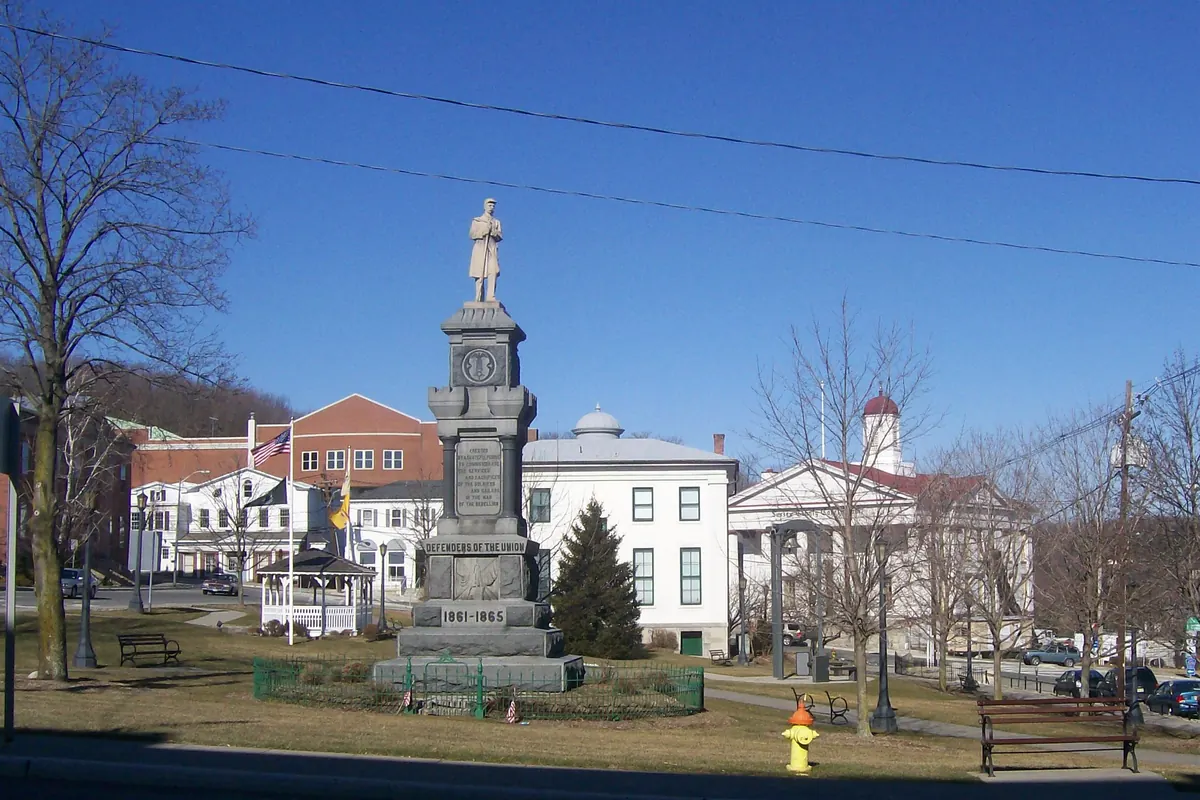
The courthouse you see today at the corner of High and Spring Streets dates to 1847. On January 28 of that year, a faulty flue in the prisoners’ quarters set the interior on fire. The county freeholders chose to rebuild on the same site, reusing the old walls, and the result was the Greek Revival courthouse with its columns and cupola that still anchors the Newton Green.
Sussex County in the American Revolution
The National Register nomination lays out how busy Sussex Court House was during the war. Soldiers were recruited from the courthouse steps for the local militia that guarded forts from the Delaware Water Gap to Port Jervis. On December 14, 1776, General Horatio Gates crossed the county from Isaac Van Campen’s in Walpack to Sussex Court House, where Benedict Arnold continued on with the troops and reached Washington’s army at Trenton on December 22. Washington himself passed through Sussex Court House several times. Count Casimir Pulaski kept his headquarters there in 1778, and from July 1777 the courthouse held prisoners of war.
Turnpikes, Farms and the Railroad
Newton grew into the crossroads of the county. The Morris Turnpike and the Newtown-Deckertown Turnpike met there, and later roads were built to carry produce from Sussex County farms to the county seat so it could be shipped out on the railroad.
Zinc Mining in Franklin and Ogdensburg
The other big chapter in Sussex County history happened underground. The Sterling Hill Mining Museum explains that early settlers thought the ore at Sterling Hill and Franklin held iron and copper, and some was even shipped to Wales for smelting in 1772. It turned out to be rich in zinc. Small companies began mining in 1836, and in 1897 the New Jersey Zinc Company consolidated the properties into a major operation.
The Franklin mine closed in 1954. Sterling Hill kept running until 1986 and reached 2,675 feet deep with 35 miles of tunnels. Today the Sterling Hill Mining Museum in Ogdensburg, a National Historic Site since 1991, lets you walk the upper level of the mine and see what it calls the largest collection of fluorescent minerals in the world. Our Sterling Hill Mining Museum guide has tour details.
Where to See Sussex County History Today
- Sussex County Courthouse and Newton Green: stand on the Green at High and Spring Streets in Newton to see the 1847 courthouse and the historic buildings around it.
- Sterling Hill Mining Museum: 30 Plant Street, Ogdensburg, for the zinc mining story and the mine tour.
- Local museums: historic homesteads, mineral museums and heritage sites across the county are listed in our museums in Sussex County NJ guide.
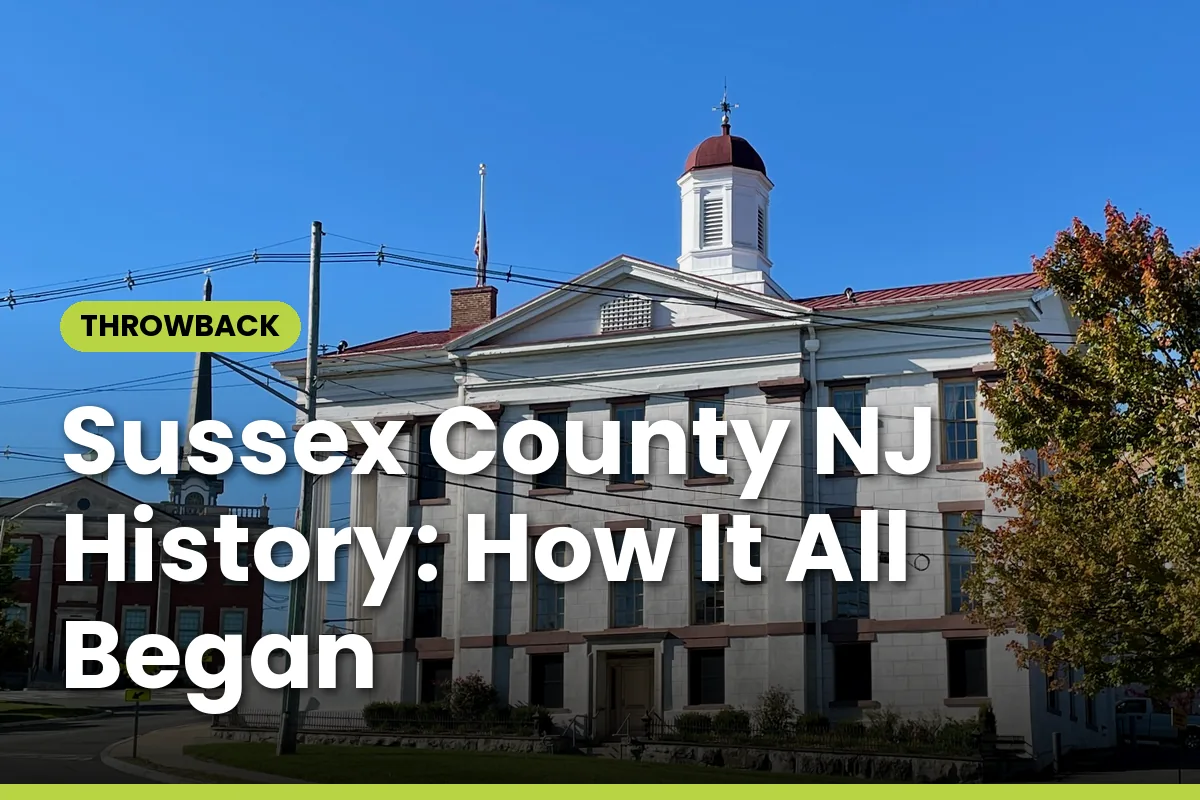
Featured photo: the Sussex County Courthouse at High and Spring Streets, Newton, by Zeete via Wikimedia Commons, CC BY-SA 4.0.
Have a Sussex County event coming up?
Share it with Sussex County.
Festivals, fundraisers, 5Ks, school nights, grand openings. Send us the date, time, place and a flyer, and our team will reach out about getting it in front of Sussex County.
Enjoying our Sussex County coverage?
Add us as a preferred source and our stories show up higher in your Google results.
Add as a preferred source